When continuous deployment backfires // Intentional churn & re-engagement // In which I finally talk about videogames // Part 1 of many
One of the most startling videos about business that I’ve ever seen was actually about a video game.
The game is nine years old, the video is three years old, and I still think about both of them constantly.
The video is long (and good, if you’re into that sort of thing), but I’ll summarize below:
https://www.youtube.com/watch?v=tmuy9fyNUjY
Hm, okay, there’s a lot in there.

Here’s a counterintuitive appetizer:
As good engineers, they (obviously) began their operations with continuous deployment (i.e., small, incremental improvements released every day).
Can you guess what happened? Massive churn:
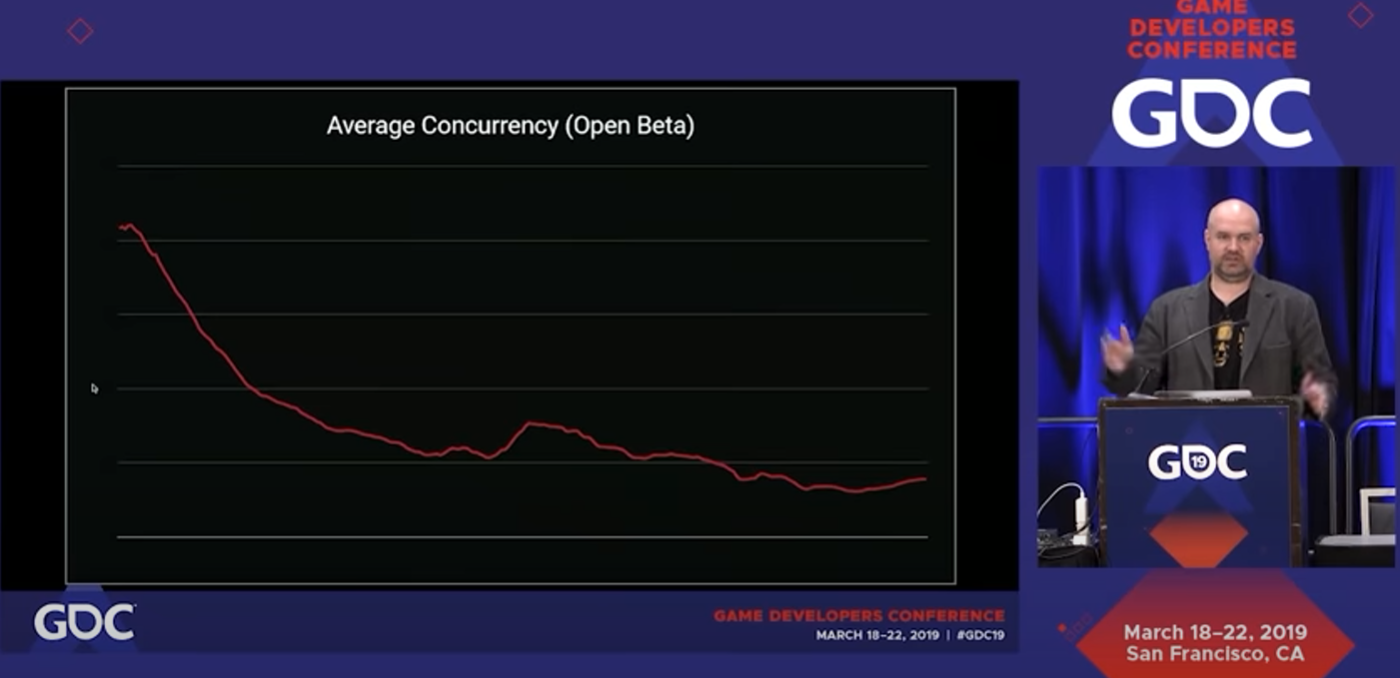
Can you guess what solved it?
Intentionally delaying new improvements into 13-week (3-month) batches:
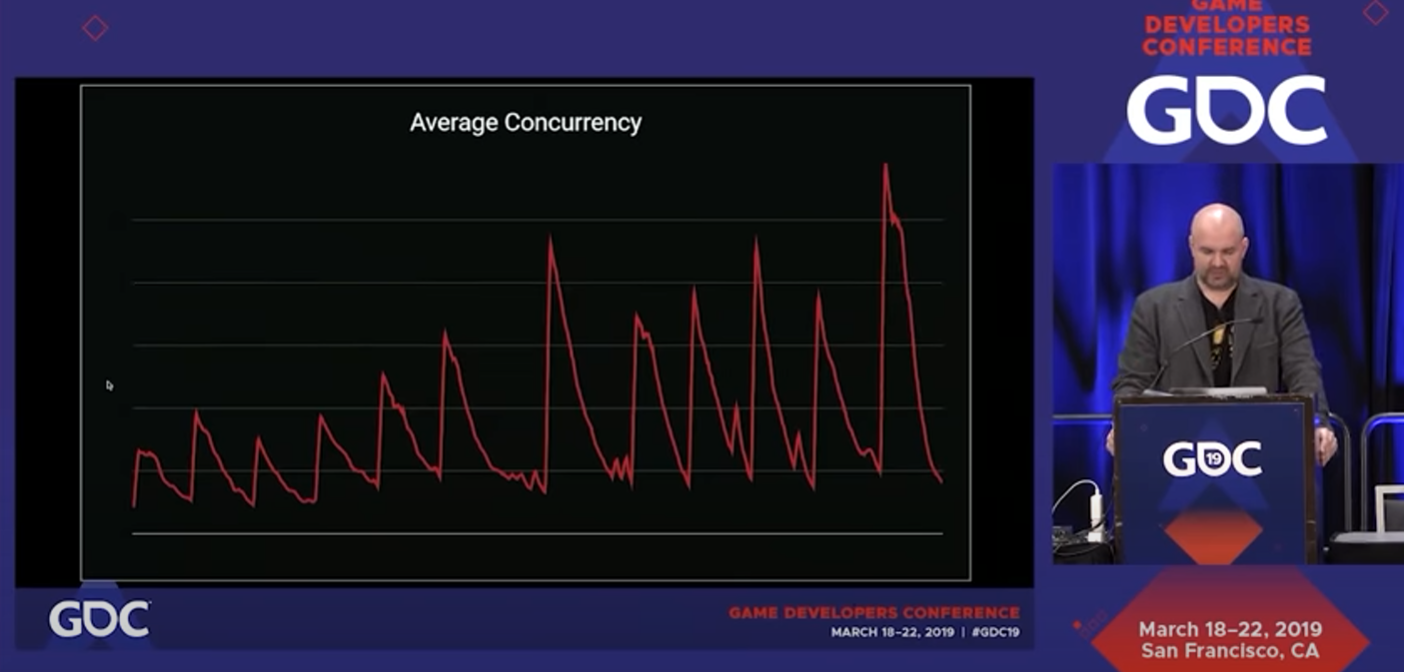
Whaaaaat!? * If you’ve spent any time in startups, this is a real mind-bender. Not just a little “hmm” bender, but a profoundly existential, rethink-everything-I’ve-ever-learned sort of revelatory apocalypse. This chart violates everything we’ve ever been told about *everything throughout the Lean decades.
Cool, so what’s happening here?
First, PR. The press won’t write about incremental everyday improvements. Everyday progress is a non-story. But they will write about big exciting batches of improvements. (That’s a values tension: iteration speed vs. PR uplift, and almost makes you think that startup advice shouldn’t be given quite so generally.)
Second, empathy and understanding for the customer journey. For many businesses, daily engagement is a vanity metric. (For an easy example, think about your laywer, physiotherapist, or plumber — you pay them not to see them — and then extrapolate to tech.) Just because you want daily engagement (as a business owner) doesn’t mean that your customers want it.
Rather than fighting this fact, GGG (the game developer in question) has embraced it. Here’s one of the most remarkable statements I’ve ever seen from a business (full quote below):
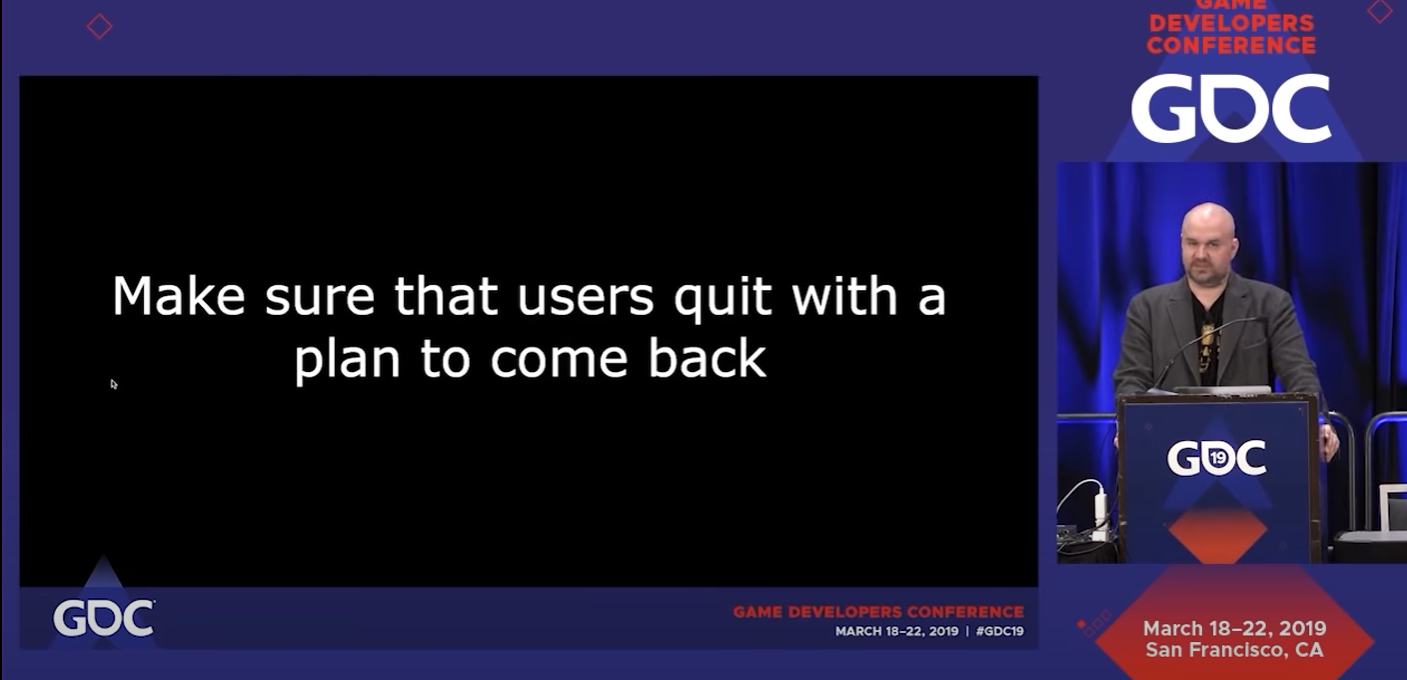
Here’s the money-quote (20:10):
The philosophy here is **players will stop playing your game.
That’s unavoidable.** Something’s gonna happen that makes them stop playing. They get a new job or whatever, they get burned out, a new game comes out.
The key is to give them a lot of opportunity to re-engage, and that means they need to really clearly know when they’re next coming back.
It is inexcusable for a player to be able to leave your game without knowing the date that they are returning to it.
And so that’s why we want to make sure that users quit with a plan to come back.
Before we clearly signaled when the next release was, players would get horribly burned out and then they would just never play again. Whereas now, they can quit before they get burned out, and that’s amazing for us, because then users are fresh [when they come back].
Have you ever seen a healthier long-term business mindset? A more humble and empathetic view toward the customers’ realities and journeys? A stronger willingness to stand against short-term vanity metrics?
To summarize the above:
1 // For their particular business, continuous deployment was a company-killing error. Not because continuous deployment is fundamentally flawed, but because all “best practice” advice must be put into context.
2 // By batching their feature releases onto a consistent and predictable schedule (every 13 weeks, in their case), they were able to unlock both the support of PR and the planned return of previous players.
Or in other words: by violating widely accepted technical best-practices and ignoring weekly/monthly retention (i.e., the golden standard of KPIs), they built a massive growth engine.
Makes you think, huh?
Anyway, I’ll need to do a couple sequels to this post (at least 2 more), since I didn’t even get to the point I originally wanted to make about this video.
We’ll get there. In the meantime, play more videogames.
🎮📺
Comments (7)
Yeah!~~ I like this counterintuitive discovery.
Working with different engineering teams during the past, I discovered there are two mindsets probably influence us:
• The engineering team who build tools and data will continue view their creation as tools and data.
• The engineering team who create experience which view their creation as a lifelong experience something players will enjoy and stay and hangout.
Building game is on the mission to create a whole new experience to satisfy players multi-dimensional needs like the storyline, social status, skills building, strategy & tactics, etc. That require SOLID HOURS & SOLID CASH. 😅
Rob, Thank you for inspiring us.
I am looking forward to reading more from you.
“which view their creation as a lifelong experience”
This really stands out to me as the key point — a long-term time horizon, and accepting that your customers/players/members have their own lives that matter far more to them than your app. By accepting that reality (instead of fighting it), you end up allowing them to keep coming back.
this reminded me of an interview i did with a growth wizardess who found that they improved ux (as measured by task completion) for their product by adding a delay and loading animation to a key step where no delay was technically necessary
because users just couldn't believe the calculation was instantaneous, so they assumed the output was untrustworthy
another instance of (a) understand where your users are coming from and (b) just because it's possible to do something faster doesn't mean you should
i could've used this book a few years ago. we had a very simple, but delightful little couples app that customers absolutely LOVED...for 8 days and then never picked up again. at the time i felt forced to reach daily, forever-usage and burnt out on dozens of feature updates and pivots. now we focus on creating 1 incredible moment per year that you do for just a few weeks and then return to later. but it took a long time to reach that realization.
Wow!
but I’m not surprised; I’ve been delving deeper into lean/agile recently, and it’s not as effective as advertised!
The most important question 🙋♂️
Which video games are you playing atm?
I’ve returned to SC2 and for now I’ve paused CIV5 and Warhammer
Also really want a ps5 to get into cupheads and head-to-head playing with friends :p
[3oz8xZnWxRal1r1zYA.gif]
On my own, currently mostly roguelite card games: Slay the Spire, Monster Train, etc. I like these little episodic ones where the game "finishes" after an hour, which helps me avoid losing all day on it ;). Path of Exile is almost too compelling for me to play... I had a real addiction to that one. Although I just installed Stellaris and am looking forward to giving that a try when I want something bigger. And then, when Teresa and I are hanging out, we're alternating between Hades, It Takes Two, Cuphead, and Doom Eternal. And we sometimes fire up the old super nintendo for a bit of Donkey Kong Country ;).
I very much know what you mean: I start SC2 at 19 and then 💥 it’s midnight….
This is the reason I started Magic the gathering on the ipad, pretty good: I might check the other ones out though :p
Oh cool! Yes, the gf and I play cuoheads, although I’m aiming for the ps5 this autumn (playing on the desktop is a bit clunky).
I was playing Stellaris last year, it’s actually very good: although they added the hacking webs function, which broke my brain. thanks for reminding me about it!
I’m on Steam if anyone wants to play a game🔥 🤓
Veteratoribus
Friend code: 116668494